
Results and Accomplishments
CTAC annually assists more than 90 organizations: states, school districts, community groups, and public and private sector funders. Our work extends across the country in 44 states and the District of Columbia. Click below to see highlights of our work in education and community development.
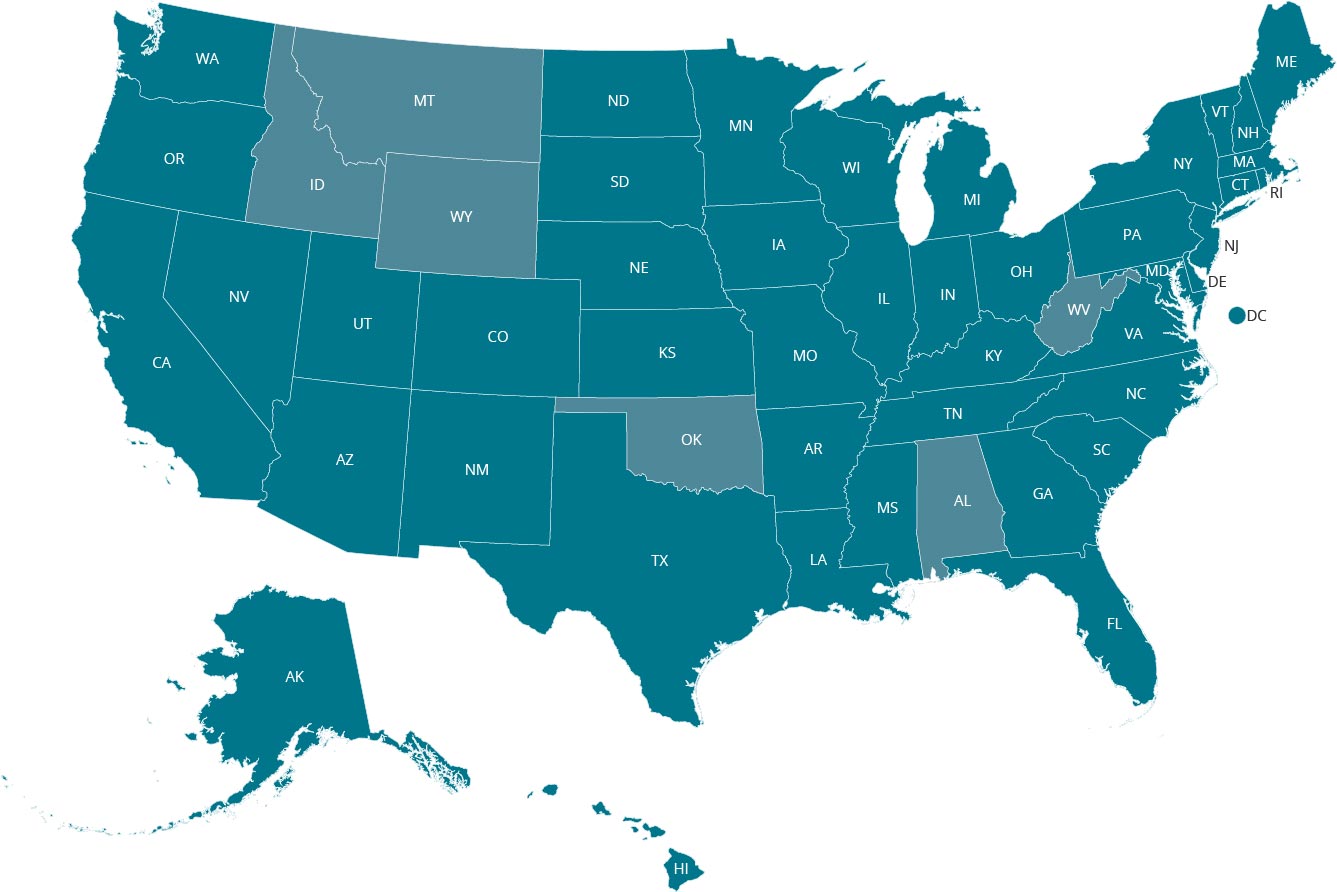
Representative Highlights
District-Wide Increases In Student Achievement
Summary
CTAC provided assistance to the Albuquerque Public Schools, the 25th largest district in the U.S., developing and implementing a landmark system of site-based reform across 120 schools, engaging and training parents as equal partners with the teachers’ union and district leadership and providing human services collaboration.
Results
- Significant improvements in academic achievement at all levels—including 70% of elementary schools, 100% of middle schools, and at the high school level national recognition for achieving the highest ACT scores of any large district in the country
- Increased attendance, family involvement, and early problem identification, and reduced dropout rates
- More than 1,000 parents were trained and played active leadership roles on school and community issues
- Achieved systemic reform sustained through two administrations
Neighborhood Revitalization
Summary
CTAC helped convene and then provided assistance to the nationally acclaimed Dudley Street Neighborhood, which includes several thousand residents, and numerous organizations who focus on affordable housing, business development and service coordination.
Results
- Led to broadest-based neighborhood revitalization effort in the U.S.
- First and only community group in the U.S. to win the power of eminent domain
- Demonstrated the critical role of community leadership in successful revitalization efforts
- Showed the power of diversity by convening a tri-lingual neighborhood coalition (English, Spanish and Cape Verdean Creole)
Student Learning Objectives (SLOs)
Summary
CTAC provided technical counsel and evaluation services to the Charlotte-Mecklenburg Schools to develop, implement, and study the impact of Student Learning Objectives (SLOs) as part of a performance-based system. CTAC’s evaluation demonstrates that high-quality SLOs contribute to improving teaching and bolstering student growth.
Results
- Statistically significant multi-year improvements in growth rates for students of teachers with SLOs compared to those in comparison schools without SLOs
- In math, the average growth rate for students was 12% greater
- In reading, the average growth rate for students was 13% greater
- The higher the quality of a teacher's SLO, the greater the likelihood that student academic growth objectives are met
State-To-District Assistance
Summary
CTAC provided assistance to the public schools in Cleveland, Ohio, during a time that included a state takeover of the district. We helped Cleveland to implement the Standard Bearer Schools process and a Principals' Performance Support System that linked evaluation to student success.
Results
- The first site-based, school reform initiative in Cleveland that showed sustained performance improvements
- Standard Bearers outperformed the rest of the district in three out of four state testing areas
- 100% lower student suspension rates at Standard Bearers compared to the rest of the district
- CTAC guided reorganization of the central administration, helping build the district's capacity to allocate scarce resources to address recurring issues that most affected student learning
- The trailblazing Principals’ Performance Support System linked principal evaluation to student success
Management-Union Collaboration
Summary
CTAC partnered with California’s Delhi Unified School District in implementing a Teacher Incentive Fund-supported initiative, providing technical counsel and evaluation services. Student Learning Objectives are the anchor of the district’s new evaluation and compensation systems, serving as both a measure of student academic growth and a measure of teacher practice.
Results
- Groundbreaking union-management collaboration on issues of evaluation and compensation in the State of California
- Delhi Board of Trustees and the Delhi Teachers Association re-opened a pre-existing collective bargaining agreement to incorporate and sustain the new performance-based human capital management system
Performance-based Compensation
Summary
CTAC assisted the Denver Public Schools to develop, implement, and assess a breakthrough performance-based compensation system incorporating Student Learning Objectives (SLOs). The project demonstrated that linking what students learn to what teachers earn can be a catalyst for systemic change that benefits students and teachers.
Results
- The most groundbreaking reform in performance-based systems in the country—ProComp
- Student achievement increased at all three school levels during all years of the initiative
- Approval by teachers of a landmark compensation system by a 3-to-2 margin
- Approval by voters of a $25 million tax increase by a 3-to-2 margin to sustain the new compensation plan
- Helped launch a national movement toward performance-based systems and SLOs
Professional Development Audit
Summary
CTAC provided a comprehensive audit that represented a landmark analysis of the effectiveness of professional development provided to educators of the Duval County Public Schools in Florida by the Schultz Center for Teaching and Leadership. Our detailed report provided evidence on the effectiveness of the district’s $33.6 million professional development investment.
Results
- Demonstrated a critically needed methodology which shows the relationship of professional development to student achievement, teachers’ instructional practices, teachers’ perceptions of their craft and of professional development, and expenditures
- CTAC showed a markedly positive relationship between teacher professional development in literacy and student growth in reading—with student achievement increasing significantly for each six hours of literacy professional development for teachers
School Turnaround
Summary
CTAC worked with Lowell Public Schools’ Charlotte M. Murkland Elementary School, identified as one of the lowest performing schools in Massachusetts. We helped implement the Standard Bearer Schools improvement model to identify and address the root causes of the school’s underperformance.
Results
- Met the school’s three-year improvement goals in a single year
- Achieved the greatest gains in state test scores of all 35 of the state’s “Level 4” schools, including significant gains in both English and math
- Sustained its academic success for three years and is now recognized as one of only four schools to go from worst to first, from Level 4 to Level 1 (top 20%)
Statewide Teacher Evaluation
Summary
CTAC provided large-scale support to the New York State Education Department to implement an integrated system of Student Learning Objectives (SLOs) and teacher observations for purposes of teacher and principal evaluation across all 714 school districts. CTAC used a train-the-trainers approach in order to strengthen SLO practice and measure student academic growth using both statewide and regional strategies.
Results
- CTAC training reached more than 220,000 teachers and 5,000 principals
- Largest statewide implementation of SLOs for purposes of evaluation in the nation
- Integrated implementation of SLOs and teacher observations
Parents as Partners
Summary
In partnership with the Seattle Public Schools, CTAC conducted the project, No Parent Left Behind, to strengthen collaboration among parents, school staff and community organizations in support of student achievement and school improvement. CTAC guided a train-the-trainers process to prepare a corps of culturally and linguistically diverse school staff, community organization representatives and parent instructors to train others across the district and community to better understand student, school and teacher data, and assume their roles as partners in school improvement.
Results
- Involved immigrant and refugee parents as equal partners in school improvement
- Engaged parents and community members speaking nine languages: Amharic, Cambodian, Chinese, English, Lao, Somali, Spanish, Tigrigna, and Vietnamese
- Built parents’ capacity to understand school performance and teacher qualification data, and partner effectively in school reform and accountability
Comprehensive School Reform
Summary
In the Christina School District, the largest in Delaware, CTAC conducted an assessment of readiness and capacity and then provided assistance through a systemic initiative, New Directions in Christina, based on our Standard Bearer Schools framework. A key success factor was the active engagement of thousands of parents in school planning and assessing reform effectiveness.
Results
- Increased student achievement for all student sub-groups as measured on three major independent assessments
- The most significant improvements in student achievement were among African American and Hispanic students, for the first time ever in the district
- Significant improvements in teaching and learning conditions, organizational support and alignment, school planning and human resource practices
- Marked strengthening of district capacities in data, research, instructional support, organizational development, professional development, fundraising and corporate involvement